
Introduction
In recent years, more sourcing teams have started paying attention to PFAS-related regulations and the phase-out of “forever chemicals.” For sourcing directors and brand managers preparing to place orders, the most pressing question is: If we stop using traditional fluorinated coatings, can our custom umbrellas still maintain strong water resistance? The short answer is yes.
Today, we will skip the complex chemical formulas and explain the eco-friendly shift from C6 to C0 DWR coating in plain English. We will also explore how materials like [RPET umbrella fabric]can help you navigate the 2026 compliance landscape.
Saying Goodbye to “Forever Chemicals”: Why More Buyers Are Moving Toward C0
To evaluate suppliers properly, it helps to understand how umbrella waterproof coatings have changed over the past few years.
The Countdown for C6 Coatings
Over the past few years, Asian factories favored C6 coatings for their water repellency and low cost. However, buyers must note that C6 still belongs to the PFAS family. These substances are notoriously difficult to degrade in nature. With the implementation of strict regulations like [California AB 1817]and [EU REACH directives], continuing to source C6 umbrellas exposes your brand to high risks of customs seizures and compliance penalties.
The “Lotus Effect” of C0 DWR Coating
The “0” in C0 stands for zero fluorine. A genuine C0 coating does not rely on toxic chemicals to repel rain; instead, it uses the physical principles of surface tension. It creates microscopic nano-structures on the fabric fibers, mimicking the “Lotus Effect” found in nature. When rain hits the canopy, it naturally beads up and rolls off. This technology is designed to meet modern compliance requirements while still providing strong water repellency.
Procurement Face-Off: C6 vs C0 Water Repellent Performance and Cost
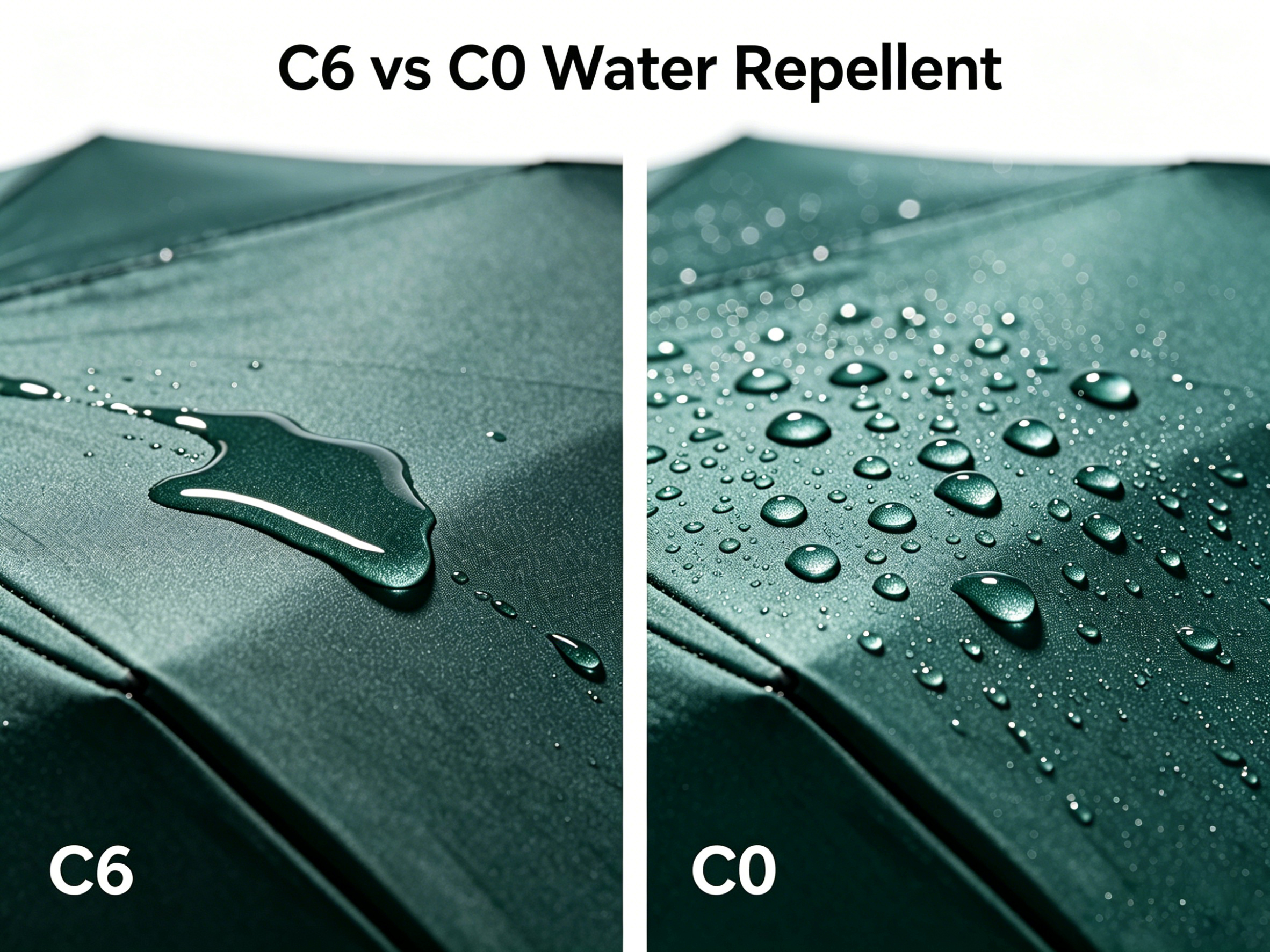
During negotiations, many buyers worry that C0 is a “watered-down” version of C6. This is a myth. Traditional fluorinated coatings do have an extra “oil-repellent” feature, but everyday umbrellas rarely encounter oil spills. If we focus purely on “hydrophobicity” (water resistance), C0 technology can achieve strong water repellency performance under standard umbrella testing conditions.
To simplify your evaluation, here is a quick comparison:
| Evaluation Metric | Traditional C6 Coating | C0 DWR Innovation |
| Compliance Risk | High (Facing bans from 2026) | Low Risk (Designed to support US/EU PFAS compliance) |
| Water Repellency | Excellent | Strong (Meets standard AATCC 22 spray ratings) |
| Oil Repellency | High | None (Irrelevant for umbrellas) |
| Unit Cost Variance | Industry baseline | Only increases by approx. $0.15 to $0.30 |
Sourcing Pitfall Advice: When inspecting C0 samples from a manufacturer, do not test for oil stains. Simply focus on the core [AATCC 22 Spray Test]. If the fabric maintains a 90+ spray rating even after 20 washes, it is a qualified product ready for mass production.
Sustainability Has Many Sides: Eco-Friendly Fabric Innovation
Solving the coating issue is only the first step. If you want to boost your company’s ESG report, the choice of canopy substrate is equally crucial. This is where eco-friendly fabric innovation comes into play.
GRS-Certified RPET Umbrella Fabric
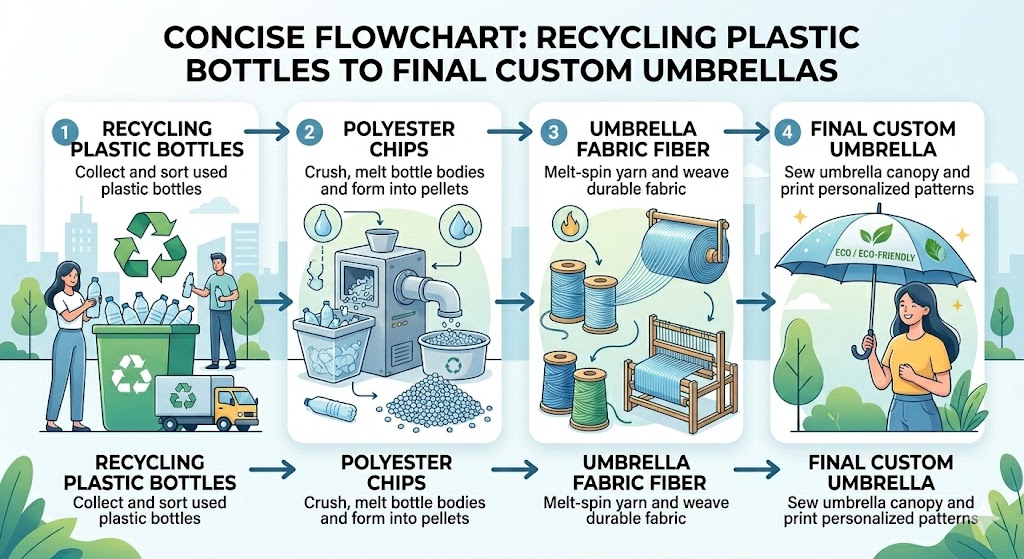
Turning discarded water bottles into high-density umbrella fabric is currently the most mature circular economy solution.
(Note: Manufacturing one 23-inch [custom golf umbrella] consumes approximately 8 to 10 recycled plastic bottles, depending on canopy size and fabric density.)
UV Digital Printing: Reducing Odor and VOCs
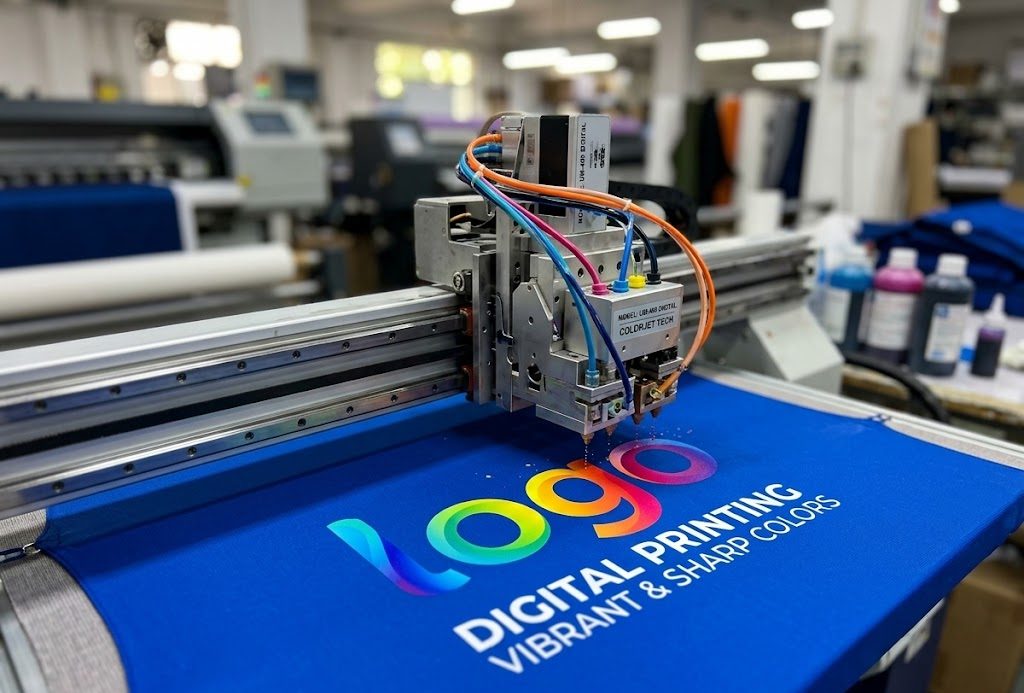
In the past, printing complex logos involved solvent-based screen printing, which often left newly unboxed umbrellas with a harsh chemical smell. Today, many experienced manufacturers have shifted to UV-cured printing. This process yields clear colors and dries instantly without thermal baking. This helps significantly reduce odor and VOC emissions during packaging and shipping.
FAQ
Q: Will a C0 coating make the umbrella fabric feel stiff and rough?
A: Early technologies had this issue. However, with modern polymer softening techniques, a properly treated C0 pongee fabric feels and drapes similarly to traditional fabrics. It meets the tactile requirements for corporate umbrellas.
Q: Can a fluorine-free umbrella withstand outdoor gales and storms?
A: Yes. Wind and rain resistance relies on high-density fabric (like 210T) and a sturdy fiberglass frame. The C0 coating handles the surface water repellency. Combined, they provide reliable weather protection.
Q: Does C0 coating lose its water repellency faster than C6 over time?
A: With proper industrial curing, C0 treatments maintain stable durability. Standard lab tests show it retains a 90+ spray rating even after 20 machine washes, making it reliable for long-term daily use.
Q: Does the C0 treatment affect logo printing or fabric color?
A: No. C0 treatments are fully compatible with modern printing techniques like UV digital and screen printing. Your corporate colors and custom logos will remain clear and sharp without bleeding.
Q: Is the Minimum Order Quantity (MOQ) higher for C0 umbrellas?
A: Generally, no. Many established umbrella manufacturers now keep standard colors of C0-treated fabrics in stock, meaning you can often proceed with normal wholesale MOQs just like traditional umbrellas.
Conclusion and Next Steps
For the 2026 procurement season, dropping toxic PFAS chemicals is no longer optional; it is becoming a standard requirement in many global markets. Partnering with a source factory that understands technology and maintains stable compliance standards helps you avoid customs risks and aligns your brand with sustainability.
If your team is reviewing PFAS-free sourcing options for 2026, we can provide material swatches and coating test references for evaluation. [Contact our team]to discuss your specific requirements.
Email:lorraine@blueprintumbrella.com
Whatsapp/Phone:+86-13632689956
Website: https://blueprintumbrella.com/