
- Introduction
- Why Special Printing Works Better for Premium Corporate Gifts
- 5 Interactive Custom Umbrella Printing Methods Explained
- 1. Hydrochromic Umbrella Printing: The Rain-Exclusive Hidden Easter Egg
- 2. Photochromic Printing: UV-Triggered Color Shifting
- 3. Reflective Screen Printing: Balancing Premium Aesthetics with Night Visibility
- 4. Luminous Screen Printing: The Visual Focus in the Dark
- 5.Watermark Printing: Restrained, Premium Texture
- Procurement Decision: How to Choose the Right Special Method?
- FAQ
- Q: Which special printing method is best for luxury or premium financial corporate gifts?
- Q: How much more expensive is special umbrella printing than standard screen printing?
- Q: How do I accurately distinguish between reflective and luminous printing?
- Q: Can these special printing methods be used on large custom golf umbrellas?
- Q: What fabric color works best for hydrochromic umbrella printing?
- Q: Can I combine special printing with standard logo printing on the same umbrella?
- Q: Are special printing methods suitable for folding umbrellas like 3-fold or 5-fold umbrellas?
- Q: How long does special umbrella printing typically last?
- Conclusion
Introduction
In standard corporate procurement, basic single-color screen printing and digital printing meet the general requirements for mass brand exposure. However, standing out requires more than standard methods. As we discussed in our custom umbrella printing guide, uninspired and low-cost branding often reduces the perceived value of the gift. This is especially true when your target audience consists of VIP clients, partners, or corporate executives.
Why Special Printing Works Better for Premium Corporate Gifts
Premium corporate procurement and mass-market promotions follow entirely distinct commercial logics. High-net-worth individuals and corporate decision-makers generally reject aggressive “walking billboards.” Instead, they favor products featuring restrained designs, exceptional textures in the details, and a certain degree of interactive engagement or practical utility.
Utilizing specialized umbrella printing methods adds a memorable and engaging element without disrupting the overall aesthetic of the canopy. This subtle and sophisticated presentation helps improve gift retention and real-world usage in daily business environments, thereby extending the brand’s lifespan organically. However, not all specialty techniques suit formal corporate gifting. For instance, while luminous options are ideal for trendy or gaming collaborations, watermark and reflective processes align much better with premium financial and automotive gifts.
Drawing on Blueprint Umbrella’s 20+ years of custom manufacturing experience, this article provides an in-depth analysis of 5 special printing methods that perform exceptionally well in commercial customization. From physical mechanisms to factory production limits, we offer a practical decision-making guide for your premium corporate gift procurement.
5 Interactive Custom Umbrella Printing Methods Explained
Different specialty inks give umbrellas different visual and functional effects. To avoid variations in mass manufacturing, it is crucial to understand the factory notes and technological boundaries behind each method.
1. Hydrochromic Umbrella Printing: The Rain-Exclusive Hidden Easter Egg
Hydrochromic printing utilizes a moisture-reactive ink that is highly sensitive to water. In a dry state, the ink layer blends semi-transparently into the canopy, remaining virtually undetectable to the naked eye. Once raindrops hit the fabric, the physical and optical structure of the ink alters, rapidly revealing the hidden colorful pattern or slogan. As the moisture evaporates and dries, the design seamlessly fades back into invisibility.
This “visible only in the rain” interaction is highly suitable for tourism promotions, water park marketing, or sports brand campaigns aiming to encourage user engagement.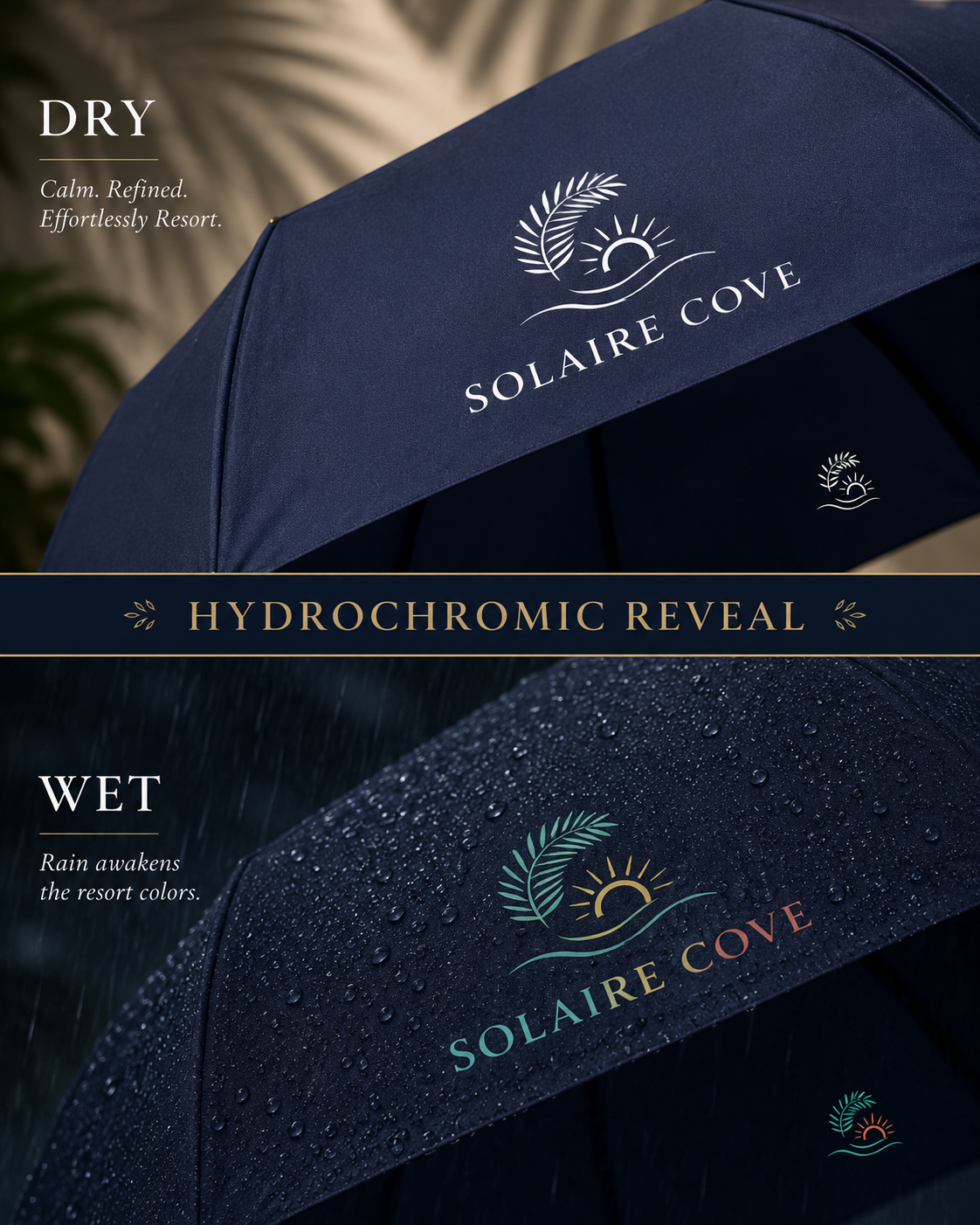
Common Mistake: Many first-time buyers select complex full-color gradients or designs with highly dense, microscopic text. Because hydrochromic ink is prone to slight physical bleeding at the edges when activated by moisture, fine lines can become blurry.
Factory Note: This method is extremely sensitive to the base fabric color. We strongly recommend using high-density fabrics in dark shades (such as solid black, deep navy, or dark grey) to ensure a distinct color contrast upon activation.
2. Photochromic Printing: UV-Triggered Color Shifting
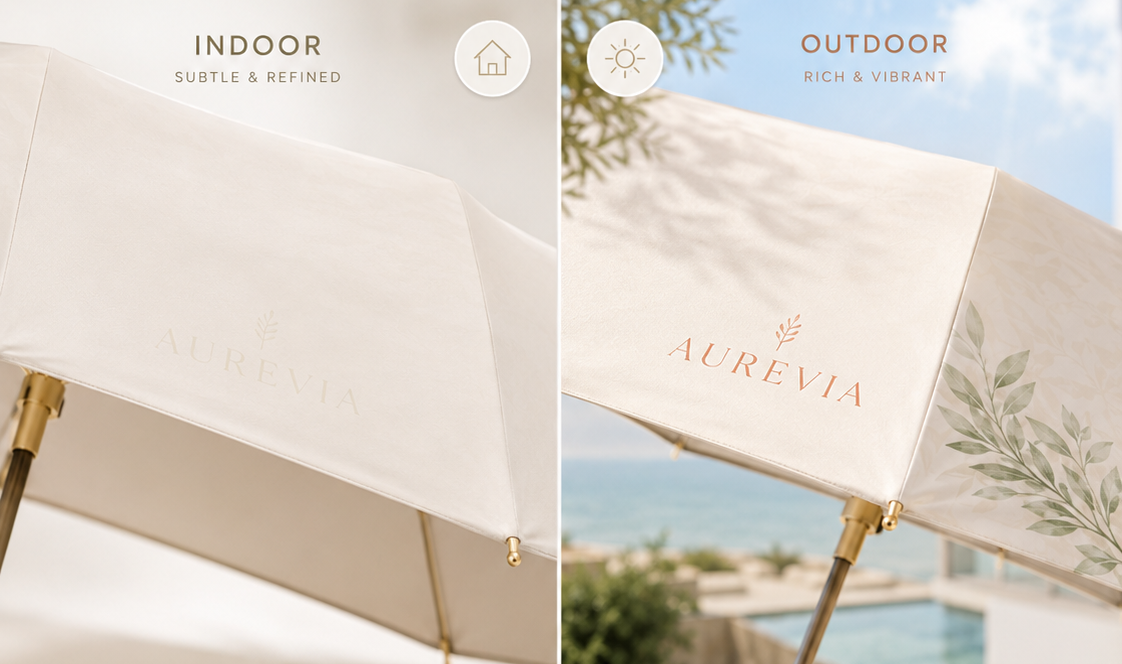
This process utilizes photochromic ink, where specialized molecules physically react exclusively to ultraviolet (UV) light. Indoors, the canopy pattern remains colorless and transparent. Upon exposure to outdoor sunlight, the design elements rapidly shift into designated shades of pink, purple, or blue. When the user returns indoors, the colors smoothly fade away.
Because the trigger mechanism is tightly bound to sunlight and weather conditions, it naturally aligns well with suncare brand marketing, VIP gifts for summer beach resorts, and outdoor music festival merchandise.
Buyer’s Trap Avoidance: End-users must be clearly informed that standard indoor lighting or illumination cannot trigger the color transformation; the core condition relies strictly on the environment’s UV intensity. Under strong direct sunlight, the color shift often triggers within seconds, though the exact speed is subject to both UV intensity and ink formulation.
Color Limitations: Photochromic inks are mostly limited to lighter pastel tones, and achieving precise Pantone color matching is highly challenging during manufacturing. For the best visual results, printing on white, light grey, or beige fabrics is recommended.
3. Reflective Screen Printing: Balancing Premium Aesthetics with Night Visibility
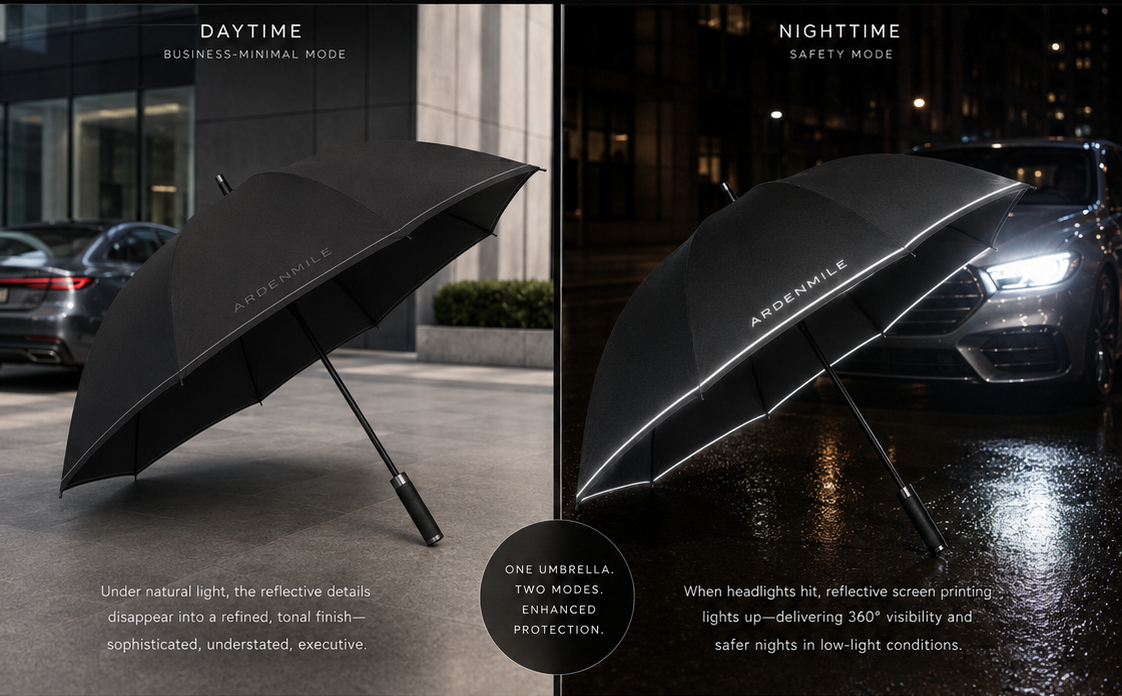
Reflective printing does not emit light independently. Instead, the ink is formulated with highly refractive microscopic glass beads. Under natural daylight, the pattern maintains a subtle silver-grey or matte metallic silver finish. At night, when hit directly by external strong lights like car headlights, the pattern bounces the light back, producing a distinct, high-visibility white reflection.
By combining brand exposure with practical nighttime safety functions, this method is a frequent choice for automotive test-drive gifts and outdoor night sports merchandise.By infusing functionality into the gift, a brand can naturally extend its presence into practical use cases.
Best Logo Style: We suggest using line-based logos, narrow border stripes, or geometric graphics. Because reflective particles have a coarser physical texture, large solid-block color fills cause the fabric to stiffen locally. This affects the smooth folding experience and increases the manufacturing risk of the print cracking over prolonged use.
4. Luminous Screen Printing: The Visual Focus in the Dark
Luminous printing involves applying ink formulated with phosphorescent powder to the canopy. Its mechanism can be summarized as “absorb light first, emit light later.” After absorbing light during the day, it continuously emits a distinct fluorescence (usually yellow-green or blue-green) once placed in a dark environment. The brightness naturally decreases over time as the stored energy depletes.
For e-sports brand collaborations, nightclub events, or trendy brand parties where catching the eye in low social light is essential, luminous printing holds a clear visual advantage.
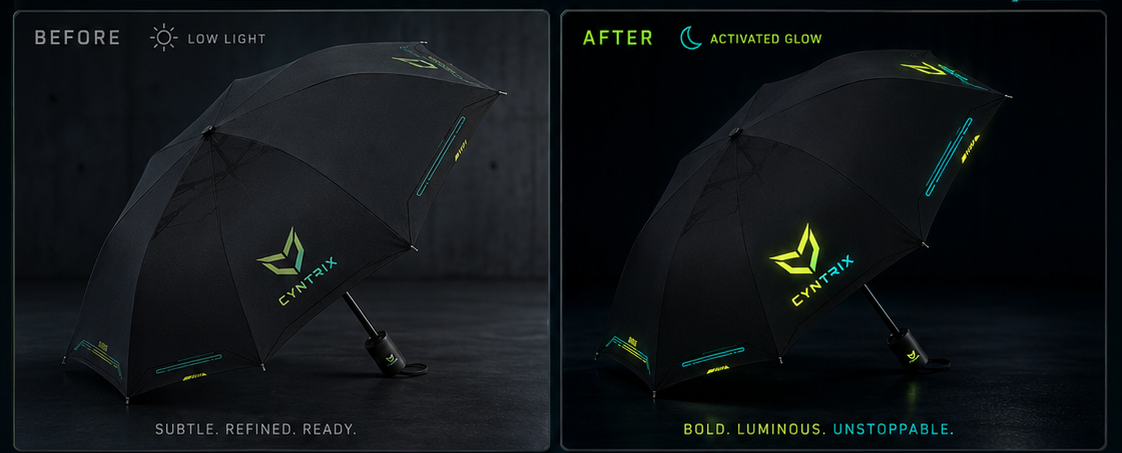
Suitability Tip (Not Suitable For): Luminous ink is not an actively powered LED light, and its duration and initial brightness heavily depend on prior light exposure. More importantly, the inherent pale yellow-green tint of the powder means it is generally not suitable for serious corporate projects requiring rigid adherence to corporate VI colors or a premium metallic finish.
5.Watermark Printing: Restrained, Premium Texture
This represents the most classic “tone-on-tone” approach in premium corporate gifting. The manufacturer precisely applies a layer of clear gloss varnish over a matte canopy fabric. When viewed straight on, the pattern is virtually hidden. The logo only reveals an elegant, glossy outline when the user moves and light refracts off the surface at a specific angle.
This quiet luxury design aligns well with the contemporary high-end business aesthetic of minimalism and restraint, making it the ideal choice for private wealth management firms, executive appreciation gifts, and luxury brand souvenirs.
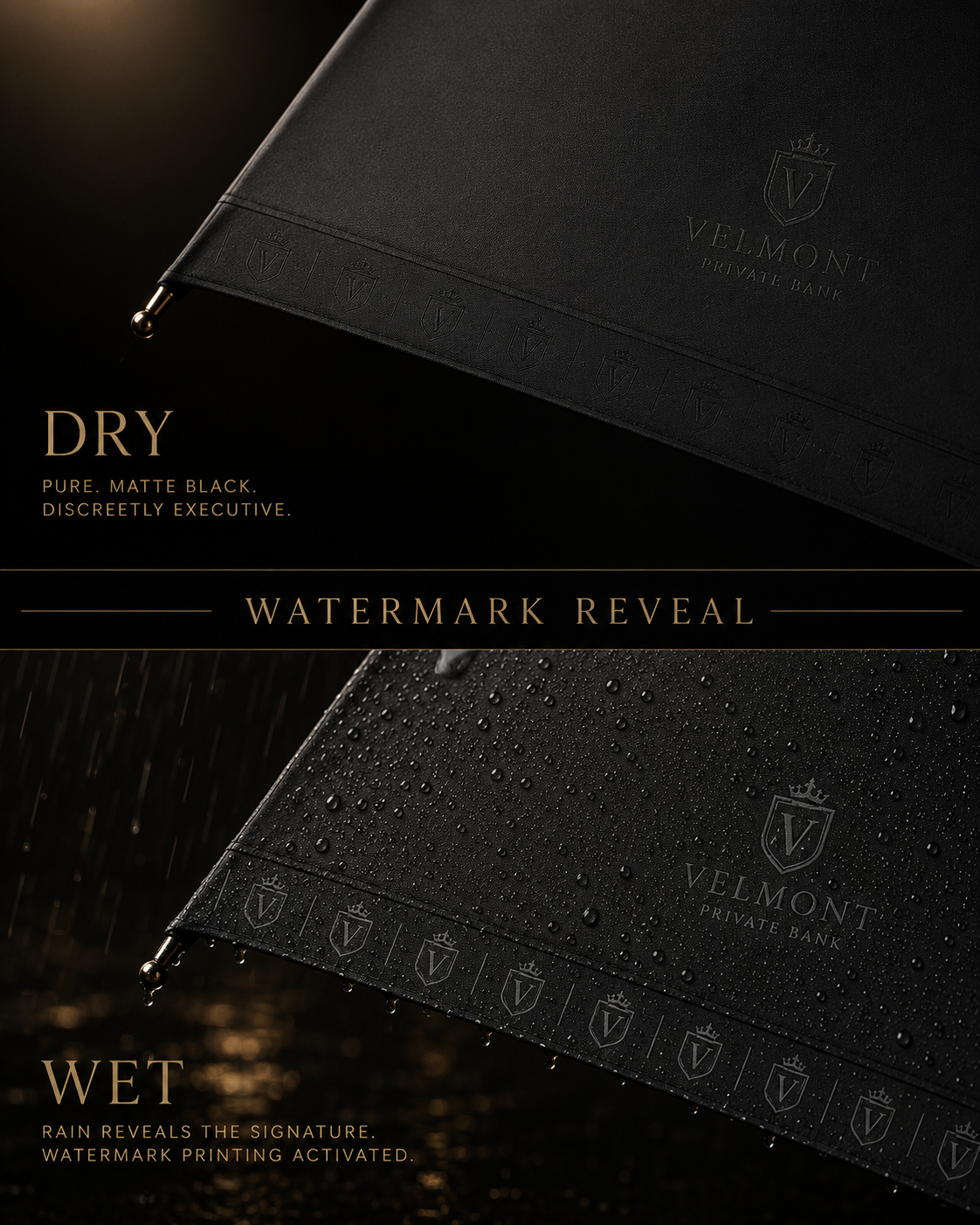
Material Requirement: This process demands strict fabric selection. It must be paired with high-density, completely matte fabrics (like 210T Pongee). Fabrics with high natural reflectivity will completely weaken the premium texture created by the varnish refraction.
Procurement Decision: How to Choose the Right Special Method?
To help B2B buyers intuitively match their project needs, we have compiled the following decision matrix based on real factory data:
| Printing Method | Ideal Industry & Scenario Rationale | Relative Cost | Recommended Umbrella & Fabric | Best Logo Design Style | Not Recommended For |
| Watermark Printing | Finance / Luxury (Maintains a restrained, premium feel) | Medium | Premium Stick Umbrellas Matte high-density Pongee | Large monogram textures Minimalist corporate marks | High-impact outdoor ads; designs requiring vibrant full-color logos |
| Hydrochromic Printing | Tourism / Sports Brands (Creates interactive rain-day Easter eggs) | Higher | Compact Folding Umbrellas Black or navy dark fabrics | Bold lines, single-color, well-defined shapes or slogans | Complex color gradients; designs with large amounts of tiny text |
| Reflective Screen Printing | Automotive / Night Events (Provides practical nighttime visibility) | High | Windproof Golf Umbrellas No base color restrictions | Narrow border stripes, line-based slogans, edge warning lines | Large, solid block color fills (causes severe fabric stiffness and cracking) |
| Photochromic Printing | Suncare / Summer (Aligns with UV-protection marketing) | Higher | Sun Umbrellas White, light grey, or beige fabrics | Vibrant, creative illustrations Campaign theme logos | Serious business gifts requiring strict, exact Pantone corporate color matching |
| Luminous Screen Printing | E-sports / Nightlife (Grabs attention in dim social settings) | Med-High | Trendy Clear Umbrellas Dark stick umbrellas | Tech-inspired or streetwear bold graphics; letter prints | Premium minimalist corporate gifts |
FAQ
Q: Which special printing method is best for luxury or premium financial corporate gifts?
Watermark Printing is typically one of the most suitable choices. By utilizing tone-on-tone light refraction, it subtly displays brand details without disrupting the minimalist business aesthetic, aligning well with the restraint and quiet luxury demanded by premium gifting.
Q: How much more expensive is special umbrella printing than standard screen printing?
Depending on the ink type and print area, the unit price for special printing is generally 20% to 40% higher than basic single-color screen printing. This figure is a preliminary estimate based on common project experience; exact pricing must be calculated by the factory based on your actual artwork.
Q: How do I accurately distinguish between reflective and luminous printing?
Reflective materials do not emit light independently; they require a direct external light source (such as car headlights or a flashlight) to bounce back a high-intensity white glare, primarily used for nighttime traffic safety. Luminous materials must first absorb natural or artificial light to store energy, after which they independently release a faint yellow-green or blue-green fluorescence in the dark.
Q: Can these special printing methods be used on large custom golf umbrellas?
Absolutely. The expansive canopy of a golf umbrella is an excellent canvas for special methods and often delivers a more striking visual impact. For example, automotive brands frequently print reflective safety warning stripes along the edges of our custom golf umbrellas; while golf umbrellas featuring hydrochromic logos make excellent rainy-day gifts for corporate executives.
Q: What fabric color works best for hydrochromic umbrella printing?
Dark fabrics (such as solid black, deep navy, or dark grey) are the primary choice. Moisture-reactive ink requires a strong color contrast environment when revealing the hidden design; a dark base provides the most dramatic “invisible to instant reveal” contrast effect.
Q: Can I combine special printing with standard logo printing on the same umbrella?
Yes. This type of hybrid printing is highly mature in the industry. For instance, you can use standard screen printing on one panel to display your permanently visible company logo, while using hydrochromic printing on another panel for a campaign slogan that only appears in the rain, creating a multi-layered brand presentation.
Q: Are special printing methods suitable for folding umbrellas like 3-fold or 5-fold umbrellas?
They are applicable, but the method must be chosen carefully. Coatings for hydrochromic and photochromic inks are relatively thin, making them highly suitable for folding umbrellas. However, because reflective or luminous inks contain coarser particles, applying them over large areas can stiffen the folding canopy, negatively affecting the smoothness of closing the umbrella and the overall hand feel.
Q: How long does special umbrella printing typically last?
Under moderate use and proper maintenance (e.g., drying open after rain, avoiding prolonged sun baking, and preventing rough abrasion), special coatings can maintain their interactive effects reliably for an extended period, meeting the quality demands of a corporate gift’s lifecycle.
Conclusion
Shedding the traditional “cheap walking billboard” image is the critical first step in upgrading corporate gift umbrellas into premium brand touchpoints. Correctly selecting special umbrella printing methods that align with your brand identity translates your design concept more effectively, ensuring your custom gifts possess both visual intrigue and practical interactive value.
Behind every successful corporate gift lies the precise matching of fabric, frame structure, and the appropriate specialty printing process. If you are preparing for an upcoming brand event but are unsure which method suits your project, reach out to the customization production team at Blueprint Umbrella.
Email:lorraine@blueprintumbrella.com
Whatsapp/Phone:+86-13632689956
Website: https://blueprintumbrella.com/